
 10 mins


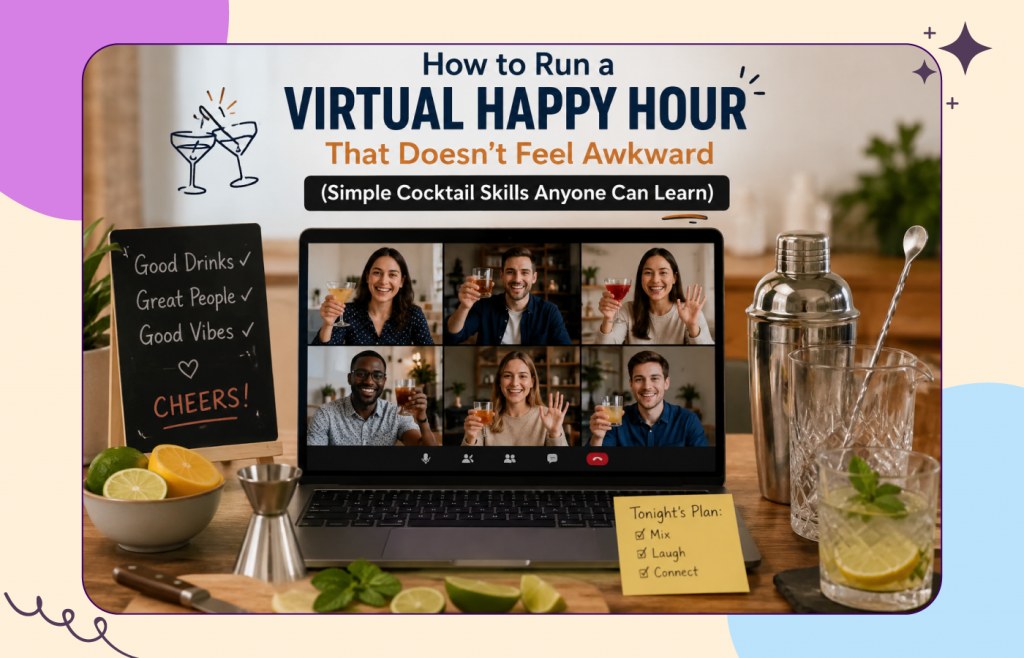
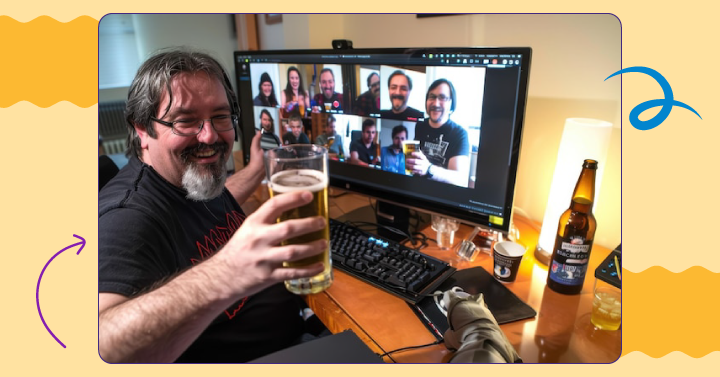
Virtual happy hours can sound like a great way to bring a remote team together. In practice, however, they can quickly become another awkward video call where everyone stares at their screen, waits for someone else to speak, and eventually starts talking about work.
The solution isn't necessarily a more elaborate event. It's giving people something natural to do together.
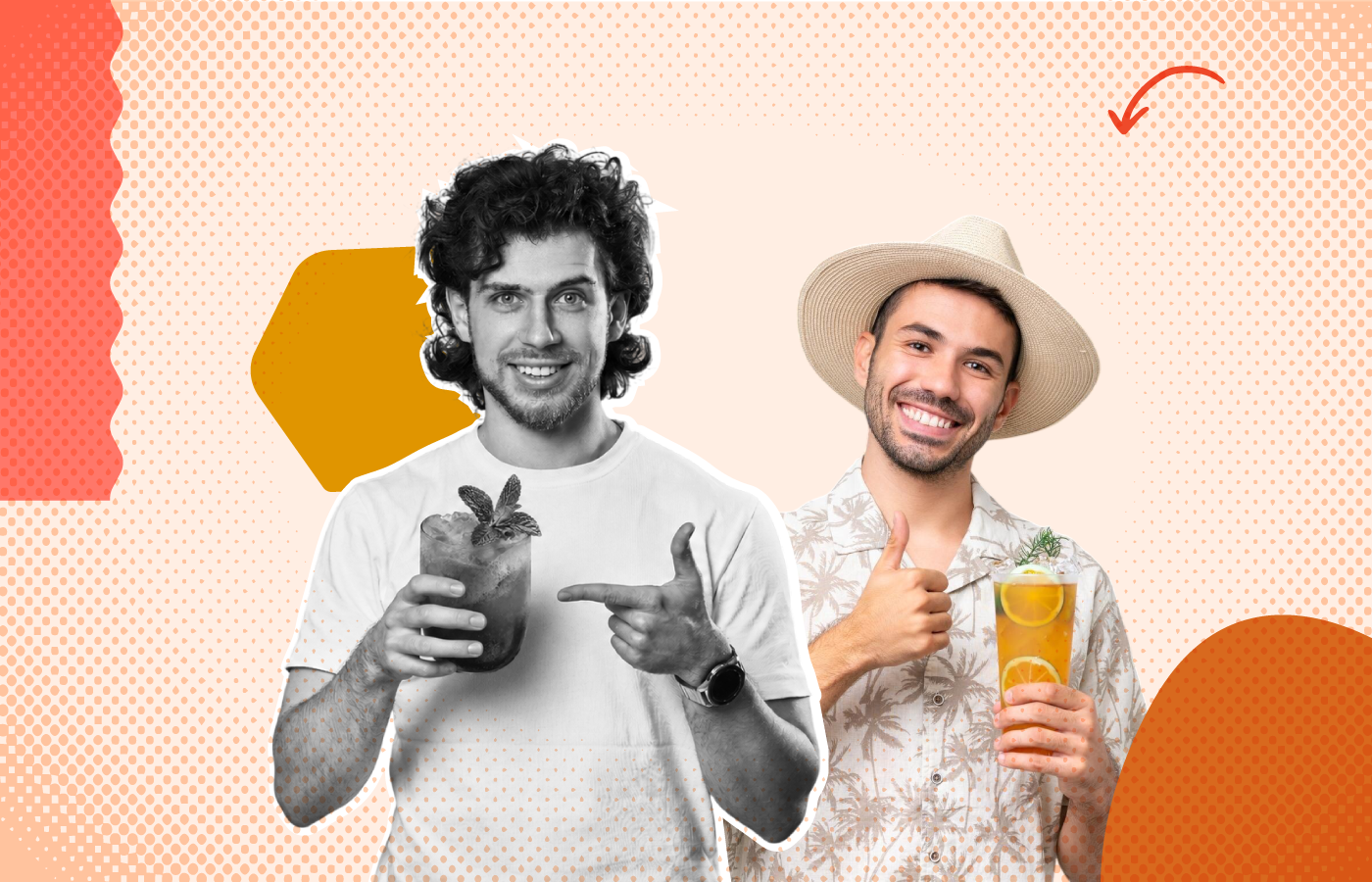
A simple cocktail-making activity can turn a virtual happy hour from an uncomfortable conversation into an interactive experience. Participants have a recipe to follow, techniques to learn, and something to discuss while they make their drinks.
And you don't need professional bartending equipment or advanced skills to make it work.
Why Virtual Happy Hours Still Matter
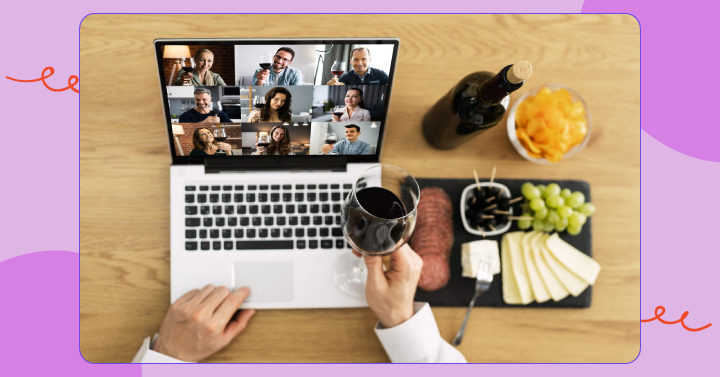
Remote and hybrid work have changed how colleagues build relationships. People who work together may rarely have the informal interactions that happen naturally in an office.
According to Gallup's latest Hybrid Work Indicator, 52% of U.S. employees with remote-capable jobs work in a hybrid arrangement, while 26% work exclusively remotely. That means a significant portion of the workforce may not regularly experience those spontaneous conversations that happen around a break room, office kitchen, or after-work gathering.
A virtual happy hour can help fill part of that gap—but only when it feels genuinely social rather than like another mandatory meeting.
The key is to create a shared experience.
Instead of simply telling everyone to bring a drink to a video call, give the group a simple activity that encourages conversation naturally.
Start With a Simple Format
The easiest way to make a virtual happy hour awkward is to overcomplicate it.
You don't need a two-hour schedule packed with games, presentations, and activities. A 45- to 60-minute session is usually plenty.
A simple format could look like this:
First 10 minutes: Casual arrival and conversation
Next 10 minutes: Introduce the cocktail and demonstrate the basics
Next 15 minutes: Everyone makes their drink
Next 10 minutes: Taste, compare, and discuss
Final 10-15 minutes: Casual conversation or a quick challenge
This gives the event enough structure to prevent awkward silences without making it feel like a formal class.
Send the recipe and shopping list several days beforehand so participants have plenty of time to prepare.
Choose a Cocktail Beginners Can Actually Make
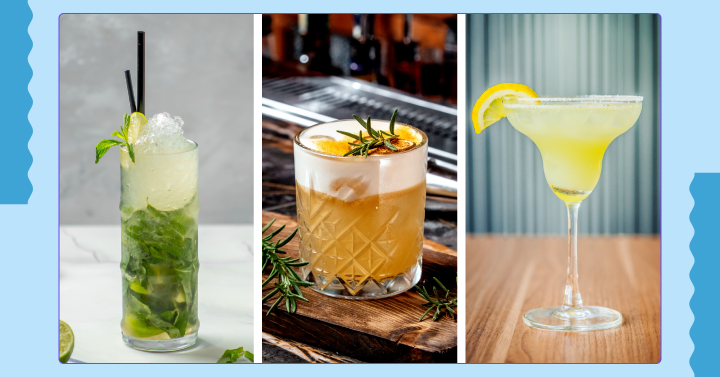
The cocktail you choose can make or break the experience.
Avoid recipes that require expensive equipment, unusual ingredients, complicated techniques, or several different types of alcohol.
Instead, choose a drink with a few easy-to-find ingredients.
Good options include:
- Margaritas
- Mojitos
- Whiskey sours
- Moscow mules
- Gin and tonics
- Palomas
- Simple spritzes
- Fruit-based mocktails
The purpose isn't to turn everyone into a professional bartender. It's to teach participants a few useful techniques while giving them something enjoyable to make.
For example, a whiskey sour introduces several basic concepts at once: measuring ingredients, balancing sweet and sour flavors, shaking with ice, and adding a garnish.
That's enough to create a useful mini learning experience without overwhelming beginners.
Teach Three Simple Cocktail Skills
You don't need to give participants a crash course in mixology. Focus on a few techniques that they can immediately use at home.
1. Measuring Ingredients
One of the simplest ways to make better cocktails is to measure the ingredients.
Experienced bartenders may be comfortable free-pouring, but beginners will get more consistent results by using a jigger or measuring tool.
Explain why proportions matter. Adding slightly too much citrus, sweetener, or spirit can dramatically change the balance of a drink.
You can even make this part interactive by asking participants what they think will happen if they increase one ingredient.
2. Shaking
Shaking is one of the most recognizable cocktail techniques, but beginners may not know why it's important.
Shaking combines ingredients, chills the drink, and introduces controlled dilution from the ice.
Demonstrate how to add the ingredients and ice, secure the shaker, and shake firmly for several seconds.
Participants who don't own a cocktail shaker can often use a clean container with a secure lid for suitable recipes. The goal is to make the activity accessible rather than require everyone to purchase professional equipment.
3. Garnishing
A simple garnish can make an ordinary homemade drink look much more impressive.
Try:
- A lime or lemon wedge
- An orange peel
- Fresh mint
- Berries
- A sprig of rosemary
- A dehydrated citrus wheel
Garnishing can also become an easy conversation starter. Ask participants to show their finished drinks on camera and explain what they used.
Make the Event Inclusive
A workplace happy hour shouldn't assume that everyone wants alcohol.
Some employees don't drink for personal reasons, while others may simply prefer a non-alcoholic option. Providing a mocktail alternative allows everyone to participate in the same activity without making anyone feel singled out.
There's evidence that interest in alcohol-free options is significant. The National Restaurant Association's 2025 State of the Restaurant Industry report found that 52% of consumers said they would like the option to order low- or no-alcohol cocktails.
That makes mocktails an easy addition to a virtual event.
A simple mocktail can use many of the same skills as a cocktail. Participants can still practice measuring, shaking, balancing flavors, chilling, and garnishing.
For example, combine citrus juice, simple syrup, sparkling water, and fresh fruit over ice. Everyone can follow the same basic process while choosing either an alcoholic or alcohol-free base.
Give People Something to Talk About
The cocktail itself solves only half the problem.
You also need to create opportunities for conversation.
Avoid putting people on the spot with questions such as, "Tell us something interesting about yourself." Those questions can feel forced, particularly when participants don't know one another well.
Instead, connect the conversation to the activity.
Try questions such as:
- What's the best drink you've ever had?
- What's your usual drink when you're out with friends?
- What's the strangest ingredient you've ever tried?
- If you could have a drink anywhere in the world, where would it be?
- What would you call your own signature cocktail?
- Are you more into sweet, sour, bitter, or spicy flavors?
These questions give people something specific to respond to and can naturally lead into other conversations.
Turn It Into a Mini Skill Session
One way to make the event more engaging is to treat cocktail-making as a small learning experience rather than simply a drinking activity.
Participants can learn how different ingredients work together, why ice matters, how dilution affects a cocktail, and how presentation can change the overall experience.
There's real consumer interest in this type of hands-on learning. The National Restaurant Association's 2025 research reported that 60% of consumers said they would participate in cocktail-making classes at a restaurant. See the National Restaurant Association's full report.
For teams that want a more structured educational experience, a mixology master class can provide professional instruction while keeping the event interactive.
The important thing is to keep the lesson accessible. Participants shouldn't feel as though they're being tested.
The objective is simply to leave with one or two new skills they can use again.
Send a Simple Shopping List
Preparation can determine whether your event feels smooth or chaotic.
Send participants everything they need at least a few days in advance.
For example:
Equipment
- Cocktail shaker or sealed jar
- Measuring jigger or small measuring cup
- Ice
- Glass
- Spoon
Ingredients
- One base spirit
- Citrus juice
- Simple syrup
- Sparkling water
- Fresh fruit or herbs
Don't assume everyone has a home bar stocked with specialty ingredients.
Offer substitutions wherever possible. If the recipe calls for lime juice, explain whether lemon juice will work. If a participant doesn't have a particular spirit, suggest an alternative where appropriate.
This keeps the event accessible and reduces the likelihood that someone skips it because they couldn't find one ingredient.
Let Participants Customize Their Drinks
A little flexibility makes the experience more fun.
After demonstrating the basic recipe, allow participants to experiment.
For example, someone might make their drink:
- More citrus-forward
- Less sweet
- More sparkling
- Fruitier
- More herbal
- Spicier
This gives participants a chance to discover their own preferences.
It also creates an easy conversation point: everyone can explain what they changed and whether they liked the result.
The emphasis should be on experimentation rather than getting the "perfect" drink.
Keep the Host Out of Meeting Mode
The host plays a major role in determining the atmosphere.
Avoid opening with a formal agenda or making everyone introduce themselves individually.
Instead, start casually and allow people a few minutes to settle in.
When demonstrating the cocktail, explain what you're doing without turning it into a presentation. Encourage people to ask questions while they're working.
If the conversation becomes quiet, introduce a simple question. If everyone is already talking, don't interrupt just because the schedule says it's time for the next activity.
The best virtual happy hours feel lightly structured rather than tightly controlled.
Add a Low-Pressure Challenge
Once everyone has made their drink, add a small challenge.
It doesn't have to be competitive.
Ask everyone to create a name for their cocktail, for example. Or let participants vote for:
- Most creative cocktail name
- Best garnish
- Most unusual combination
- Best presentation
- Best mocktail
Use a quick poll or reactions in the chat to keep things simple.
The point isn't to determine who is the best bartender. It's simply another excuse for people to interact.
A Sample 60-Minute Virtual Happy Hour
Here's a format you can use almost immediately.
0:00-0:10 — Arrivals
Give participants time to join, grab their ingredients, and chat casually.
0:10-0:20 — Cocktail Demonstration
Introduce the drink and demonstrate the basic techniques.
0:20-0:35 — Make the Drinks
Everyone prepares their cocktail or mocktail while the host answers questions and keeps the conversation moving.
0:35-0:45 — Taste and Talk
Participants try their drinks and compare how they turned out.
0:45-0:55 — Quick Challenge
Run a cocktail-name, garnish, or presentation challenge.
0:55-1:00 — Wrap-Up
Share the recipe and thank everyone for joining.
Don't Make Attendance Feel Mandatory
A virtual happy hour works best when it feels like an opportunity rather than another obligation.
Give employees permission to participate in whatever way they're comfortable with. Someone might make a cocktail, another person might choose a mocktail, and someone else might simply join for the conversation.
That flexibility is particularly useful for distributed teams working across different schedules and time zones.
You can also record the recipe demonstration or share the recipe afterward for people who couldn't attend.
The goal is to create connection, not another calendar requirement.
The Secret to Avoiding Awkwardness
The biggest mistake with virtual happy hours is assuming that people will automatically socialize just because they're placed in the same video call.
They won't always.
A shared activity gives people something to talk about and removes some of the pressure to make conversation from nothing.
Cocktail-making works particularly well because it naturally creates a sequence: gather ingredients, learn a technique, make something, experiment, taste, and compare.
It gives quieter participants an easy way into the conversation and gives more outgoing participants something to discuss.
And because the skills are simple, almost everyone can participate.
Final Thoughts
A successful virtual happy hour doesn't need expensive equipment, elaborate games, or a complicated schedule.
It needs a reason for people to interact.
A simple cocktail or mocktail-making session provides exactly that. Participants can learn how to measure ingredients, shake a drink, balance flavors, and create a simple garnish—all while having a conversation that doesn't revolve around deadlines and meetings.
With 52% of remote-capable U.S. employees working in hybrid arrangements and another 26% working exclusively remotely, according to Gallup, creating intentional opportunities for informal connection remains valuable.
The trick is to make those opportunities feel human.
Give people something simple to make, enough structure to avoid awkwardness, and enough freedom to relax. The result won't feel like another Zoom meeting. It will feel like an actual social experience.